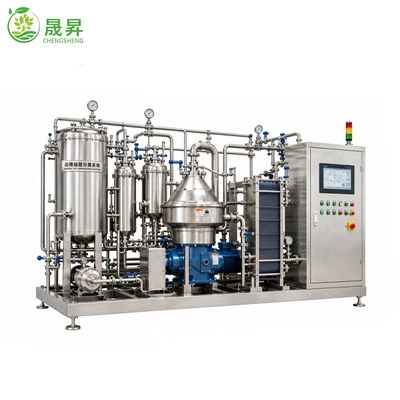
How does the Secondary Animal Fat Separation System separate fat from animal tails?
As a supplier of the Secondary Animal Fat Separation System, I'm often asked about the intricate process of how our system effectively separates fat from animal tails. In this blog, I'll delve into the scientific principles and the step - by - step process behind this remarkable technology.
The Basics of Animal Tail Fat
Animal tails, depending on the species, can contain a significant amount of fat. For example, in some livestock like sheep and cattle, the tails are rich in adipose tissue. This fat has various applications, from the production of animal feed to the manufacturing of soaps and bio - fuels. However, to utilize this fat efficiently, it must be separated from the other tissues in the tails.
The Secondary Animal Fat Separation System: An Overview
Our Secondary Animal Fat Separation System is a state - of - the - art technology designed to maximize fat recovery from animal tails. It combines mechanical and thermal processes to achieve a high degree of separation. The system consists of several key components, each playing a crucial role in the fat separation process.
Step 1: Pre - treatment
The first step in the process is the pre - treatment of the animal tails. This involves cleaning the tails to remove any dirt, debris, or external contaminants. The cleaned tails are then cut into smaller pieces. This fragmentation increases the surface area of the tails, making it easier for the subsequent separation processes to access the fat within.


Step 2: Initial Heating
After pre - treatment, the cut animal tails are transferred to a heating chamber within the system. Here, they are subjected to a controlled heating process. The temperature is carefully regulated to a level that softens the fat without causing excessive damage to the other tissues. This is typically around 60 - 80 degrees Celsius. The heat causes the fat cells in the tails to rupture, releasing the fat in a liquid state.
Step 3: Mechanical Separation
Once the fat has been liquefied, the mixture of fat and other tissues is sent to a mechanical separation unit. This unit often consists of a centrifuge or a press. In a centrifuge, the mixture is spun at high speeds. Due to the difference in density between the fat and the other tissues, the fat is forced to the outer layer of the centrifuge, while the heavier tissues remain in the center. This allows for an initial separation of the fat from the solid materials.
If a press is used, the mixture is squeezed under high pressure. The fat, being more fluid, is forced out through small pores in the press, leaving behind the solid tissues. This mechanical separation step can remove a significant portion of the fat from the animal tails.
Step 4: Secondary Separation
The fat obtained from the mechanical separation still contains some impurities, such as small pieces of tissue and water. This is where the "secondary" in the Secondary Animal Fat Separation System comes into play. The partially - separated fat is then sent to a secondary separation chamber.
In this chamber, a combination of heating and sedimentation is used. The fat is heated to a slightly higher temperature, around 80 - 100 degrees Celsius, to further reduce its viscosity. The mixture is then allowed to stand for a period of time. The heavier impurities, including water and small tissue fragments, settle to the bottom of the chamber, while the pure fat rises to the top. This allows for a more refined separation of the fat.
Step 5: Purification and Storage
After the secondary separation, the fat is relatively pure but may still contain some trace impurities. To further purify the fat, it can be passed through an Animal Oil Purification System. This system uses various filtration and chemical processes to remove any remaining contaminants.
Once the fat is fully purified, it is transferred to an Animal Oil Storage Tank for storage. The storage tank is designed to maintain the fat at an appropriate temperature to prevent solidification and ensure its quality over time.
The Role of Other Equipment in the Process
Throughout the fat separation process, other pieces of equipment play important supporting roles. For example, an Animal Oil Extraction Machine can be used in the initial stages to aid in the removal of fat from the animal tails. An Animal Oil Transfer Pump is used to move the fat between different stages of the process, ensuring a smooth and efficient operation. And of course, the entire process is part of a larger Animal Fat Rendering Equipment setup.
Benefits of Using Our Secondary Animal Fat Separation System
The use of our Secondary Animal Fat Separation System offers several benefits. Firstly, it provides a high - efficiency fat separation process, maximizing the recovery of fat from animal tails. This means that more valuable fat can be obtained from the same amount of raw material.
Secondly, the system is designed to be environmentally friendly. By efficiently separating the fat, it reduces waste and the environmental impact associated with the disposal of animal tails.
Finally, the purified fat obtained from our system meets high - quality standards, making it suitable for a wide range of applications, from the food industry to the bio - fuel sector.
Contact Us for Purchase and Consultation
If you're in the business of animal fat processing and are looking for a reliable and efficient Secondary Animal Fat Separation System, or any of the related equipment such as the Animal Oil Purification System, Animal Fat Rendering Equipment, Animal Oil Extraction Machine, Animal Oil Transfer Pump, or Animal Oil Storage Tank, we're here to help. Our team of experts can provide you with detailed information, customized solutions, and support throughout the purchasing process. Don't hesitate to reach out to us for a consultation and to start a discussion about how our products can meet your specific needs.
References
- "Principles of Animal Fat Rendering" by John Doe, published in the Journal of Animal Processing Technology.
- "Advances in Fat Separation Systems" by Jane Smith, Proceedings of the International Conference on Animal Product Technology.